
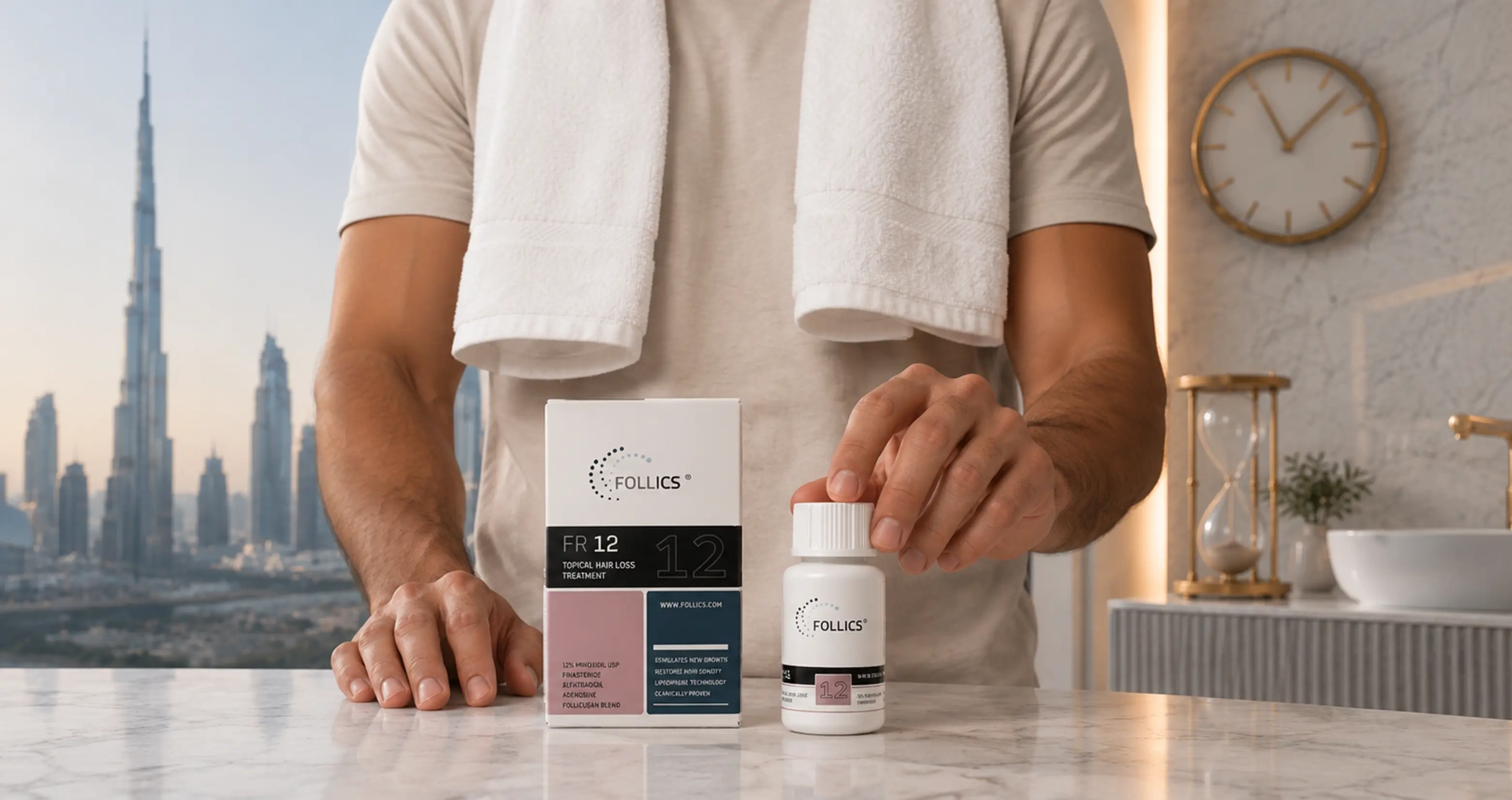
You’re standing in a pharmacy in Dubai, the memory of parting your hair in the bathroom mirror that morning still fresh in your mind, staring at a row of minoxidil products with no idea which one to pick. Two percent or five? Foam or solution? Once a day or twice? Topical minoxidil questions like these are, genuinely, the most common conversation the team at Hims n Hers UAE has with customers every single week. And the confusion is completely understandable.
Topical minoxidil holds a unique position in hair loss medicine: it’s the only topical hair regrowth treatment with FDA approval for androgenetic alopecia in both men and women. Despite being around since the 1980s, most people still don’t know how it actually works at the follicle level, which concentration they need, or what timeline is realistic. Worse, many people start using it incorrectly and quit before it has a chance to work. This guide walks you through all of it, from the science to the side effects to the honest timeline, so you can make a well-informed decision before you open the box.
What topical minoxidil actually does to your hair follicles
How a blood pressure drug became the go-to hair loss treatment
Minoxidil wasn’t developed for hair. It was created in the 1970s as an oral vasodilator to treat high blood pressure, and doctors noticed something unexpected: patients were growing hair in places they hadn’t had it in years. Researchers subsequently developed topical formulations to concentrate the effect on the scalp while keeping systemic absorption low. Understanding that origin matters, because it explains exactly why the drug works the way it does. For a concise summary of the drug’s history and development as a topical treatment, see the comprehensive review on the subject.
The prodrug mechanism: your scalp enzymes do the real work
Topical minoxidil doesn’t arrive at your follicles in its active form. It’s a prodrug, meaning it’s biologically inert until your scalp converts it. The sulfotransferase enzyme SULT1A1, present in hair follicles, transforms minoxidil into minoxidil sulfate, the compound that actually drives regrowth. This conversion step is why individual response varies so dramatically: some scalps have high enzyme activity and convert minoxidil efficiently, others don’t. A retrospective enzymatic assay study (Goren et al.) reported 95% sensitivity and 73% specificity for predicting treatment response based on follicular SULT1A1 activity levels alone. Earlier biochemical research into minoxidil metabolism also supports this enzymatic activation pathway.
How it wakes dormant follicles and extends the growth phase
Once converted, minoxidil sulfate works through several mechanisms simultaneously. It opens ATP-sensitive potassium channels in the smooth muscle cells surrounding follicles, causing vasodilation that improves microcirculation and delivers more oxygen and nutrients to the hair root. It also shortens the telogen (resting) phase and extends the anagen (active growth) phase, which directly translates to thicker, longer hairs over time. Minoxidil also stimulates vascular endothelial growth factor (VEGF), promoting new blood vessel formation around follicles and further improving the local environment for growth. For readers who want a technical breakdown of these molecular actions, a clear summary of the drug’s mechanism is available.
Concentrations and formulations: picking the right one
2% vs 5%: the evidence-based breakdown for men and women
The standard recommendation is straightforward: 5% for men, applied twice daily, and 2% solution twice daily for women. The reason women have traditionally been started on 2% is to reduce the risk of unwanted facial hair growth, since minoxidil can stimulate hair anywhere it contacts skin. That said, 5% foam once daily is also a well-tolerated and effective option for women and is widely used clinically. What the evidence is clear on is this: 5% consistently outperforms 2% for hair regrowth, particularly in men with male pattern hair loss. Starting at the lower concentration for women makes practical sense, but it’s not the ceiling. For a practical, patient-focused discussion of dosing and side effects in women, see this clinical overview on dosing and results for female users.
Foam vs solution: more than cosmetic preference
Foam and solution produce comparable regrowth outcomes in clinical comparisons. The real difference comes down to tolerability, and that difference is significant for a lot of users. Liquid solutions typically contain propylene glycol as a carrier solvent, and propylene glycol is a known irritant. It can cause scalp itching, burning, redness, and flaking, particularly in people with sensitive skin or underlying scalp conditions like seborrheic dermatitis. Foam formulations are propylene glycol-free, faster-drying, and less greasy. For anyone who starts on a liquid solution and finds the scalp irritation difficult to manage, switching to foam frequently reduces that irritation without appearing to reduce regrowth benefit in trials. Practical comparisons between the two formulations are covered in consumer-facing comparisons, and community discussions also reflect users’ tolerability experiences.
Off-label uses: beard growth and beyond
Beard minoxidil is real, and the evidence is more solid than most people realize. One randomized, double-blind, placebo-controlled trial (Ingprasert et al., 2016) using 3% topical minoxidil solution applied twice daily for 16 weeks showed a statistically significant increase in facial hair count versus placebo in a group of 48 men. A published case report also documented improved beard growth with 5% foam applied daily over an extended period. That said, this use is off-label: minoxidil is approved for scalp hair loss, not beard enhancement, and the overall evidence base remains small. If beard regrowth is your goal, consult a clinician before starting rather than self-prescribing. For practical how-to guides and patient-reported outcomes regarding facial application, see these resources on minoxidil for beard growth and a consumer-facing beard growth guide.
How to apply topical minoxidil correctly for maximum effect
The step-by-step application routine
Application method matters more than most people realize. For the solution, part your hair to expose the thinning area and apply 1 mL directly to a dry scalp using the dropper, then gently spread it with your fingertips. For the foam, dispense half a capful onto your fingers rather than directly onto your scalp, then massage it into the affected areas. Both formulations share the same non-negotiable rules: apply only to a completely dry scalp, let the product dry fully before styling or lying down, and wash your hands thoroughly after every application. Applying to damp or wet hair reduces scalp absorption, as the product is diluted before it can penetrate effectively. Authoritative consumer guidance on correct application and precautions is available for reference.
Common mistakes that quietly undermine results
The most common error is applying minoxidil right after showering, when hair and scalp are still damp. Second is rinsing it off too soon, typically when someone applies it before washing their hair later that morning. Third is using more than the recommended amount on the assumption that a higher dose speeds results; it doesn’t, and it increases the risk of systemic absorption. Inconsistent dosing is a major driver of treatment failure, because minoxidil’s effect on the hair cycle depends on sustained presence. Think of it like a subscription your follicles need to keep receiving, not an occasional treatment.
Side effects, contraindications, and what should stop you applying it
The scalp reactions most users notice first (and what to do)
The most commonly reported local side effects are itching, redness, dryness, and flaking, largely tied to propylene glycol in liquid solution formulations. Switching to foam typically reduces these reactions significantly. There’s one early development that alarms nearly every new user but is completely expected: initial shedding in the first four to eight weeks. Minoxidil pushes resting telogen hairs out of the follicle to make way for new anagen growth. This temporary increase in daily shedding is a sign the treatment is progressing as intended, not failing. It settles on its own, and visible regrowth follows. For an explanation of how propylene glycol can affect scalp health, see this discussion on scalp irritants and carriers, and a consumer-facing breakdown of propylene glycol in hair products.
Serious side effects and the red flags that require stopping
Serious side effects are uncommon with topical use but do occur when too much minoxidil is absorbed systemically. The warning signs are rapid or irregular heartbeat, chest pain, dizziness, swelling of the face or limbs, and sudden unexplained weight gain. If any of these appear, stop the treatment immediately and seek medical attention. One factor that significantly increases absorption risk is applying minoxidil to an irritated, broken, or infected scalp, damaged skin allows far more of the drug into the bloodstream than intact scalp does, which is why checking your scalp condition before each application matters. For a patient-oriented list of side effects and when to contact a clinician, see this consumer guidance on minoxidil safety.
Who should not use topical minoxidil
Clear contraindications include a known allergy to minoxidil or any ingredient in the formulation, age under 18, and uncontrolled cardiovascular conditions. Pregnant and breastfeeding women should consult a doctor before use rather than self-starting. At standard topical doses, minoxidil has minimal clinically significant drug interactions because systemic absorption is low under normal conditions. The practical caution is to avoid applying other scalp products immediately after minoxidil, let it dry fully first to prevent interference with absorption or unintended product spread. For an expert patient guide covering who should avoid topical minoxidil and basic precautions, see the ISHRS patient resource.
A realistic, month-by-month timeline for results
What to expect in the first three months
Month one is the hardest because visible results are rare. Post-marketing surveillance data for 5% minoxidil indicates only around 13.9% of users notice any change in the first month. Month two is when most early responders begin to see initial changes, approximately 52% of first-time responders fall into this window. By the end of month three, the majority of early responders have noticed some improvement. The scalp is in active transition during this entire period, and the temporary shedding phase typically falls within this window too. Consistency through these early weeks is what separates users who see results from those who don’t. For summaries of clinical timelines and expected outcomes, several systematic reviews and studies provide measurable timelines for visible improvement.
From six months onward: when the real results show up
Meaningful visible density improvement typically appears between months four and six, with measurable increases in hair diameter by month six in clinical studies. Peak regrowth in 5-year follow-up data is reported at around the 12-month mark. In one large male clinical study, 84.3% of participants were rated at least moderately improved by one year. The point every user needs to understand upfront: those results persist only while treatment continues. Stopping minoxidil leads to loss of regained hair within three to six months, because the follicles revert to their previous cycle without the sustained stimulus. This is a long-term maintenance commitment, not a course of treatment with a finish line. For readers seeking deeper clinical analyses of long-term outcomes, a recent review in the Journal of Cosmetic Dermatology discusses longer-term data and considerations.
Getting minoxidil in the UAE: what to look for and where to start
OTC options vs prescription-strength formulations
Topical minoxidil at standard 2% and 5% concentrations is widely available through UAE pharmacies and specialist online retailers, though availability can vary, it’s worth confirming the current classification with a UAE pharmacist or checking guidance from DHA or MoHAP before purchasing. These concentrations are the appropriate starting point for most people and carry the strongest clinical evidence base. Not everyone responds adequately to standard strengths, however, particularly those with lower scalp sulfotransferase activity or more advanced hair loss. Higher-concentration formulations, including combined minoxidil-finasteride topicals, are available at prescription strength and offer a more targeted approach for non-responders. Clinicians typically recommend these combination products as the next step when monotherapy hasn’t produced sufficient results, since they work on two separate mechanisms simultaneously. For a clear patient-facing summary of minoxidil products and how they are used in practice, the ISHRS patient resource is helpful.
Why Hims n Hers UAE is the practical starting point for UAE residents
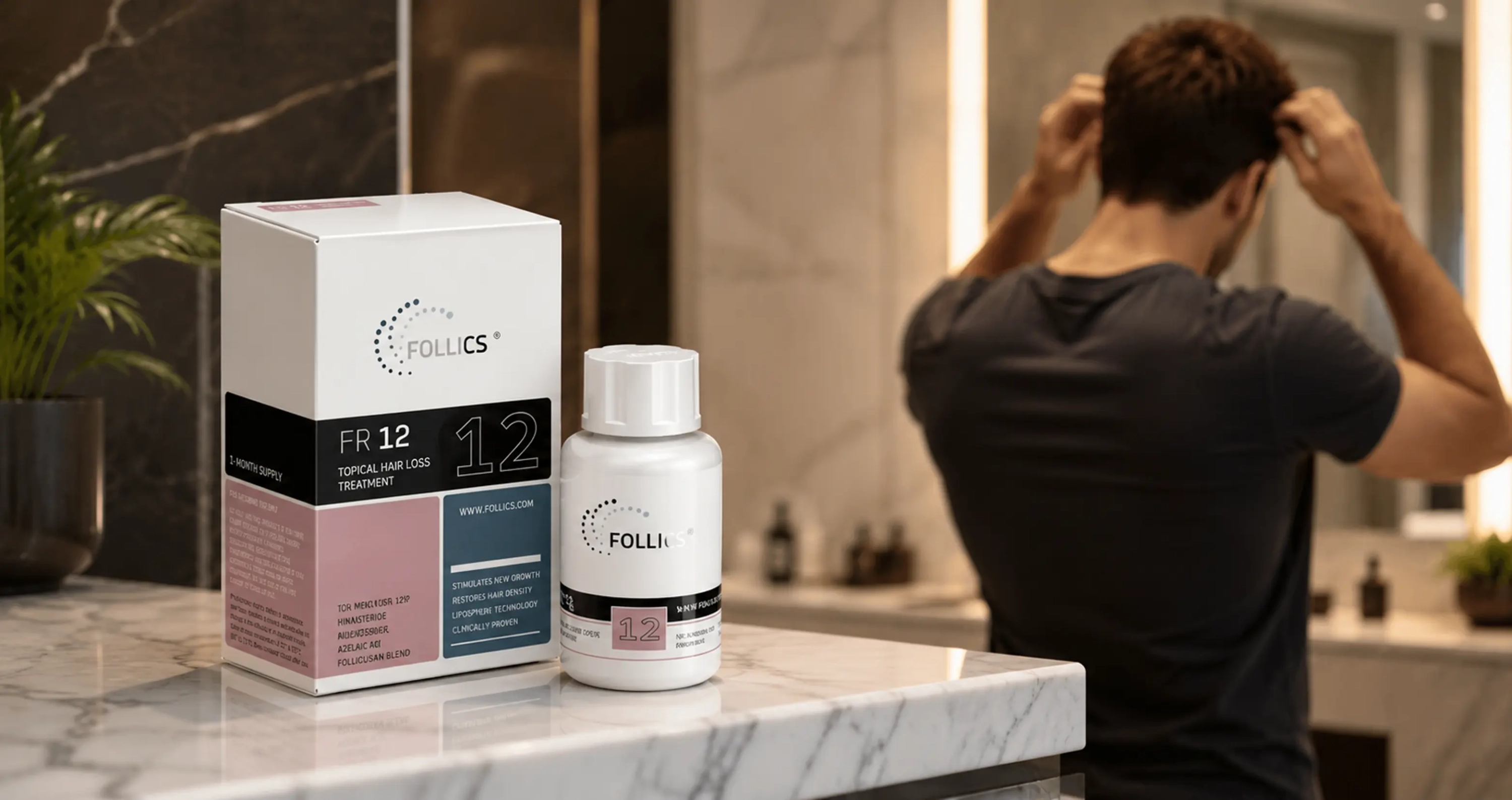
Hims n Hers UAE stocks a range of minoxidil options, including standard-strength formulations and higher-concentration products such as the Follics FR range. For UAE residents who need more than what a standard pharmacy shelf provides, having access to a broader product range through a single specialist retailer simplifies the process considerably. The team has been working with UAE customers on hair loss treatment decisions since 2020, and discreet delivery is available across the UAE, so getting started doesn’t require a trip to a clinic or pharmacy. For anyone unsure where their hair loss falls on the spectrum, or which formulation suits their situation, that guidance is part of what the service offers. If you’re comparing foam and solution in-store, several consumer comparisons outline practical pros and cons of each format.
The bottom line on topical minoxidil
Topical minoxidil is the most clinically validated topical hair regrowth treatment available, with decades of evidence supporting its use in both men and women with androgenetic alopecia. Concentration, consistent application, and realistic expectations are what determine whether it works for you. Early shedding is normal. Results take months, not weeks. And stopping treatment reverses the gains.
If you’ve used standard OTC concentrations consistently for six to twelve months without adequate response, the evidence points toward higher-strength or combination formulations as the next step. That conversation is worth having with a clinician or with a specialist who understands the full range of options available in the UAE.
The science here is well-established, among the most robust in hair regrowth medicine. For most people, the real barrier isn’t access or evidence. It’s simply starting, staying consistent, and giving your follicles enough time to show what they’re actually capable of.
NCBI review: topical minoxidil, mechanism of action, minoxidil for women dosage, ISHRS patient guide to minoxidil, WebMD minoxidil information, effectiveness of 5% minoxidil, Journal of Cosmetic Dermatology review, Rogaine foam versus liquid, Reddit discussion on foam vs liquid, Instagram anecdote, propylene glycol and scalp irritation, truth about propylene glycol, sulfotransferase research, novel enzymatic assay predicts response, minoxidil beard growth, beard growth guide
FAQS
Q: How does topical minoxidil actually work on hair follicles?
A: Topical minoxidil is a prodrug that scalp follicles convert into the active compound minoxidil sulfate via the sulfotransferase enzyme SULT1A1. Minoxidil sulfate opens ATP-sensitive potassium channels, improves microcirculation, stimulates VEGF, shortens the telogen phase and lengthens the anagen phase, which together promote thicker, longer hairs over time.
Q: Why was a blood pressure drug turned into a hair loss treatment?
A: Minoxidil was originally developed as an oral vasodilator for high blood pressure and clinicians noticed unexpected hair growth as a side effect. Researchers created topical formulations to concentrate the effect on the scalp while keeping systemic absorption low, producing a localized regrowth therapy for androgenetic alopecia.
Q: What is the difference between 2% and 5% minoxidil and which should I choose?
A: Evidence shows 5% minoxidil consistently outperforms 2% for hair regrowth. The usual guidance is 5% twice daily for men and 2% twice daily for women to reduce the risk of unwanted facial hair, though 5% foam once daily is a well-tolerated and effective option for many women in clinical use.
Q: Does everyone respond to topical minoxidil the same way?
A: No — response varies because minoxidil must be converted to minoxidil sulfate by follicular SULT1A1, and enzyme activity differs between individuals. A retrospective enzymatic assay study (Goren et al.) found follicular SULT1A1 activity had 95% sensitivity and 73% specificity for predicting treatment response, illustrating how conversion influences outcomes.
Q: Should I expect side effects or systemic effects from topical minoxidil?
A: Topical formulations were developed to limit systemic absorption and concentrate effects on the scalp, reducing systemic side effects compared with oral use. However, topical minoxidil can stimulate hair where it contacts skin, which is why lower concentrations are often recommended for women to reduce unwanted facial hair growth.
Q: Foam or solution — does it matter which formulation I use?
A: Both foam and solution deliver active drug to the scalp, and 5% foam once daily is noted as a well-tolerated and effective option, especially for women. Choice often comes down to personal preference, tolerability, and ease of application rather than major differences in efficacy described in the article.
Q: How long will it take to see results and should I keep using it?
A: Regrowth happens because minoxidil shifts follicles into a longer anagen phase and out of telogen, so improvements occur over multiple hair cycles and require ongoing use. The article warns that many people start using minoxidil incorrectly or quit too early, so consistent, long-term application gives the treatment a chance to work.