
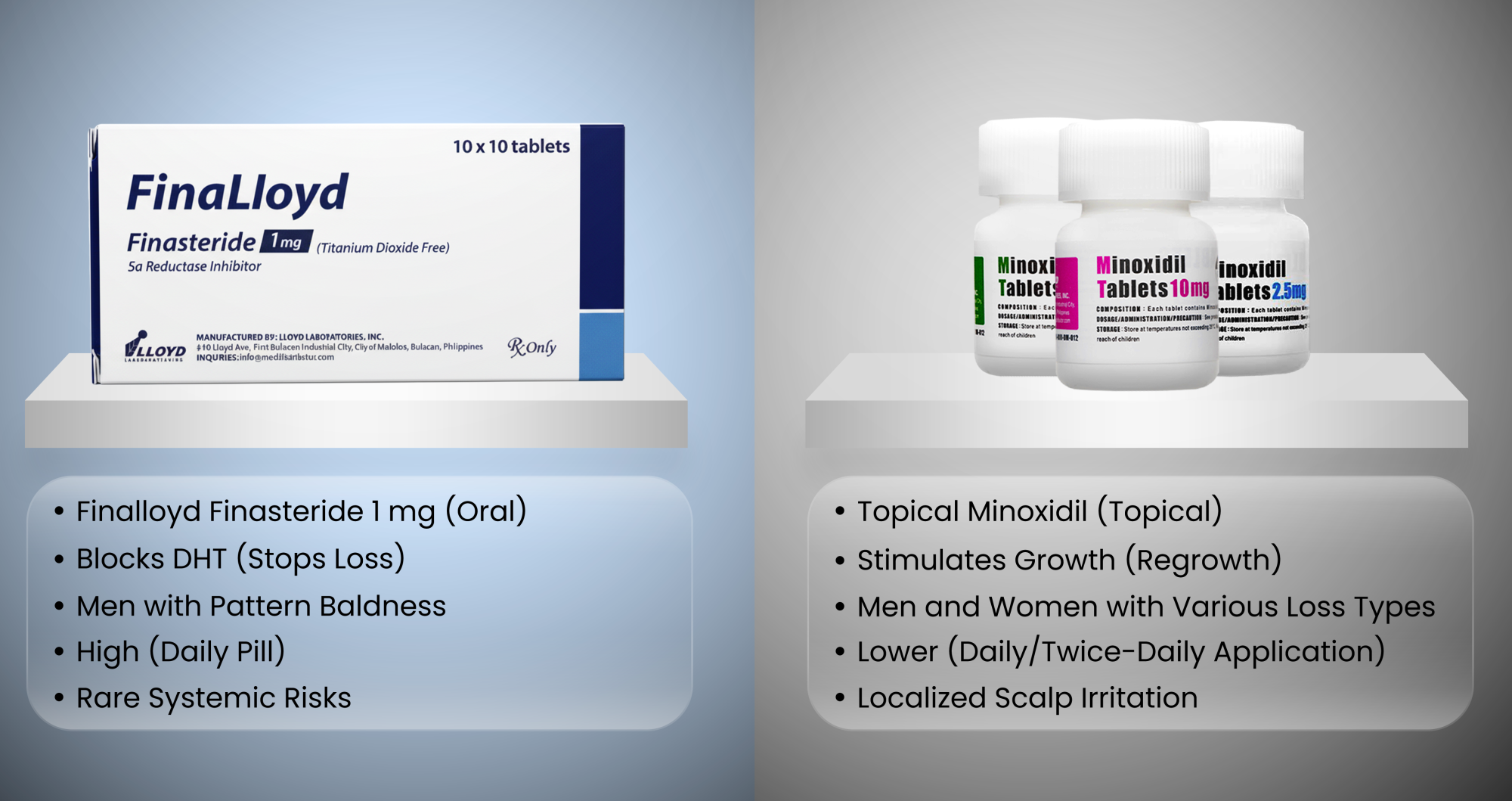
Dealing with thinning hair can be overwhelming. With so many treatments available, it’s easy to feel confused. Among the most popular options are Finasteride vs Minoxidil—two treatments that tackle hair loss from different angles. But how do they compare, and which one is best suited for your needs?
This guide will break down the pros, cons, and mechanisms behind Finasteride vsMinoxidil to help you make an informed decision about your hair loss treatment.
When it comes to treating hair loss, Finasteride vs Minoxidil are often a subject of debate. Both have proven effectiveness in helping individuals regrow hair, but each has its pros and cons. In this article, we will explore the differences, benefits, and potential side effects of these two popular treatments.
What is Finasteride?
Finasteride is an oral medication commonly prescribed to treat hair loss in men, particularly for androgenetic alopecia (male pattern baldness). It works by blocking the hormone dihydrotestosterone (DHT), which is responsible for shrinking hair follicles. By reducing DHT levels, Finasteride helps prevent further hair loss and promotes regrowth.
For more information on the scientific background of Finasteride, check out this study on PubMed.
What is Minoxidil?
Minoxidil is a topical solution used to treat hair loss. Unlike Finasteride, it is applied directly to the scalp. Minoxidil works by widening the blood vessels in the scalp, which in turn promotes hair follicle activity and growth. Many people find Minoxidil effective for stimulating hair regrowth, especially in the crown area.
For more details on Minoxidil, including its history and effectiveness, refer to the Mayo Clinic’s hair loss treatments page.
Understanding the Difference: Finasteride vs Minoxidil
Both Finasteride vs Minoxidil have been clinically proven to help with hair loss. However, they work in different ways, and what works for one person may not be as effective for another. Here’s an in-depth look at each treatment:
Finasteride: Tackling the Root Cause of Hair Loss
Finasteride is a prescription medication that primarily targets the hormonal causes of hair loss, specifically DHT (Dihydrotestosterone), a hormone that shrinks hair follicles and causes hair thinning in men.
How Finasteride Works
- Mechanism: Finasteride blocks the enzyme 5-alpha reductase, which is responsible for converting testosterone into DHT. By lowering DHT levels, Finasteride prevents hair follicles from shrinking, slowing down hair loss and even stimulating new growth in some cases.
- Result: With regular use, Finasteride can effectively halt hair thinning and potentially restore hair to areas where follicles are still capable of growth.
For more details, you can check out the official Finasteride vs Minoxidil comparison to understand how Finasteride works in depth.
Pros of Finasteride
- Targets the root cause: By blocking DHT, Finasteride directly addresses the hormonal cause of male pattern baldness (Androgenetic Alopecia).
- Convenient: Finasteride is taken in a simple daily pill form, making it easy to incorporate into your routine.
- Highly effective: It tends to work better than Minoxidil for stopping hair loss and maintaining existing hair.
Cons and Considerations
- Gender restrictions: Finasteride is primarily prescribed for men and is not recommended for women, particularly during pregnancy, as it may cause birth defects.
- Potential side effects: Though rare, some men experience side effects such as reduced libido, erectile dysfunction, or breast tenderness. It’s important to discuss these with a doctor before starting treatment.
For a more in-depth look at the benefits of Finasteride, visit the page on Finalloyd Finasteride effectiveness.
Minoxidil: Stimulating Hair Growth from the Outside In
Minoxidil is a topical solution or foam that you apply directly to the scalp to stimulate hair growth. It’s available over-the-counter, making it a more accessible option than Finasteride.
How Minoxidil Works
- Mechanism: Minoxidil is believed to improve blood flow to hair follicles, revitalizing dormant follicles and promoting hair growth. Though the exact mechanism isn’t fully understood, the increase in blood supply helps follicles receive more nutrients and oxygen, which may support hair regrowth.
- Result: While it doesn’t address the hormonal root cause of hair loss, Minoxidil can effectively stimulate hair growth and reduce further thinning by keeping follicles in the growth phase longer.
Pros of Minoxidil
- Gender-inclusive: Both men and women can use Minoxidil, though the concentration differs (men typically use 5%, and women use 2% or 5% foam).
- Localized treatment: Since it’s applied directly to the scalp, side effects are typically limited to the area of application, such as itching or scalp irritation.
- Easy to use: Although applying it twice daily can be a hassle for some, it’s a non-invasive solution that doesn’t require a prescription.
Cons and Considerations
- Does not address the root cause: Minoxidil doesn’t target DHT, the hormone responsible for many forms of hair loss, so once you stop using it, any new hair growth will likely fall out.
- Slower results: Expect to see noticeable results in 2 to 4 months, with full effects taking around 6 months. It can be slower than Finasteride, which tends to act faster in halting hair loss.
- Inconvenience: The daily application of Minoxidil can be cumbersome for some people, especially if you’re looking for a more hands-off solution.
Finasteride vs Minoxidil: Which is Better for You?
Your choice between Finasteride vs Minoxidil depends on several factors, including your gender, the cause of your hair loss, and your treatment preferences.
For Men with Male Pattern Baldness
- Finasteride is generally the most effective treatment for male pattern baldness since it directly targets the root cause—high levels of DHT. If you’re looking to stop further hair loss, it’s the most potent option.
- Best Combined Approach: Many dermatologists recommend a combination of Finasteride vs Minoxidil to tackle both the prevention of hair loss and the regrowth of hair. This combination approach helps protect existing hair while encouraging new growth, offering the most comprehensive solution.
For Women Experiencing Hair Loss
- Minoxidil is typically the go-to treatment for women experiencing hair thinning. While Finasteride is not recommended for women due to its hormonal effects, Minoxidil has shown good results for female pattern baldness. Women should start with the 5% foam, applied once daily, for best results.
Treatment Preference: Pill or Topical
- Finasteride offers a convenient pill form that’s easy to take daily, making it ideal if you prefer a straightforward, minimal-effort solution.
- Minoxidil, while effective, requires regular topical application, which can be time-consuming and messy. However, it’s a good choice if you want to avoid systemic drugs and prefer a localized solution.
Final Thoughts: Finding the Right Hair Loss Treatment for You
Both Finasteride vs Minoxidil are effective hair loss treatments, but they work in very different ways. Finasteride addresses the hormonal cause of hair loss, while Minoxidil helps stimulate hair growth from the outside in.
If you’re a man with male pattern baldness, Finasteride is likely your best option for halting hair loss, and combining it with Minoxidil can further enhance your results. For women, Minoxidil is typically the preferred choice.
Consult Your Doctor
Before starting any hair loss treatment, consult with a dermatologist or healthcare provider to determine the best solution for your specific needs. They can help you understand the potential side effects, benefits, and what to expect during the treatment process.
Take Control of Your Hair Recovery
Don’t let hair loss affect your confidence. Whether you choose Finasteride vs Minoxidil, or both, taking action today can help you regain healthier, thicker hair. Start your journey toward hair restoration with the right treatment plan that works for you.
Summary Comparison: Finasteride vs Minoxidil
| Feature | Finasteride | Minoxidil |
|---|---|---|
| Primary Action | Blocks DHT (stops hair loss) | Stimulates hair growth (regrowth) |
| Best For | Men with pattern baldness | Men and women with various hair loss |
| Convenience | High (daily pill) | Moderate (daily/twice-daily application) |
| Side Effects | Rare systemic risks (e.g., libido, erectile issues) | Localized scalp irritation, itching |
| Root Cause | Yes, tackles hormonal cause | No, only stimulates regrowth |
Comparing Finasteride vs Minoxidil
- Effectiveness:
- Finasteride: Studies have shown that Finasteride can prevent hair loss and even stimulate regrowth in up to 90% of men. However, it is only effective while the medication is being taken.
- Minoxidil: According to research, Minoxidil is effective for approximately 60-70% of users, especially for regrowing hair in the crown area. However, its effectiveness may decrease once the treatment is stopped.
- Side Effects:
- Finasteride: Some side effects of Finasteride include decreased libido, erectile dysfunction, and a potential increase in the risk of prostate cancer. These side effects are rare but should be discussed with your doctor.
- Minoxidil: While generally safe, Minoxidil can cause scalp irritation, unwanted facial hair growth, and dizziness. Always use the product as directed.
Takeaway:
The best hair loss treatment for you depends on your gender, the root cause of your hair loss, and what you’re comfortable with in your daily routine. Whether you opt for Finasteride, Minoxidil, or both, both have proven effectiveness when used consistently. However, the ideal treatment plan may combine both solutions for optimal results.
What’s Next?
Ready to take control of your hair restoration journey? Whether you choose Finasteride, Minoxidil, or both, your hair can regain its strength and volume. Make sure to consult with your dermatologist to create a customized plan that fits your needs.