

Hair issues are a worldwide source of irritation ranging from obstinate flakes to uncontrollable frizz. Although some problems may seem small, they can greatly affect our self-esteem and general hair condition. The good news? Most often, hair issues are not irreversible barriers. With a thorough grasp of what’s behind your hair woes and a few clever modifications to your hair care regimen, you can turn your locks from troubled to photo-perfect.
This instruction will decode five of the most often seen hair issues split ends, dandruff, oily hair, dry hair, and frizz. For each, we will define it, examine its most likely causes, and—most importantly—offer practical, expert-backed solutions that will enable you to get the strong, glossy hair you merit.
1. Dry Hair
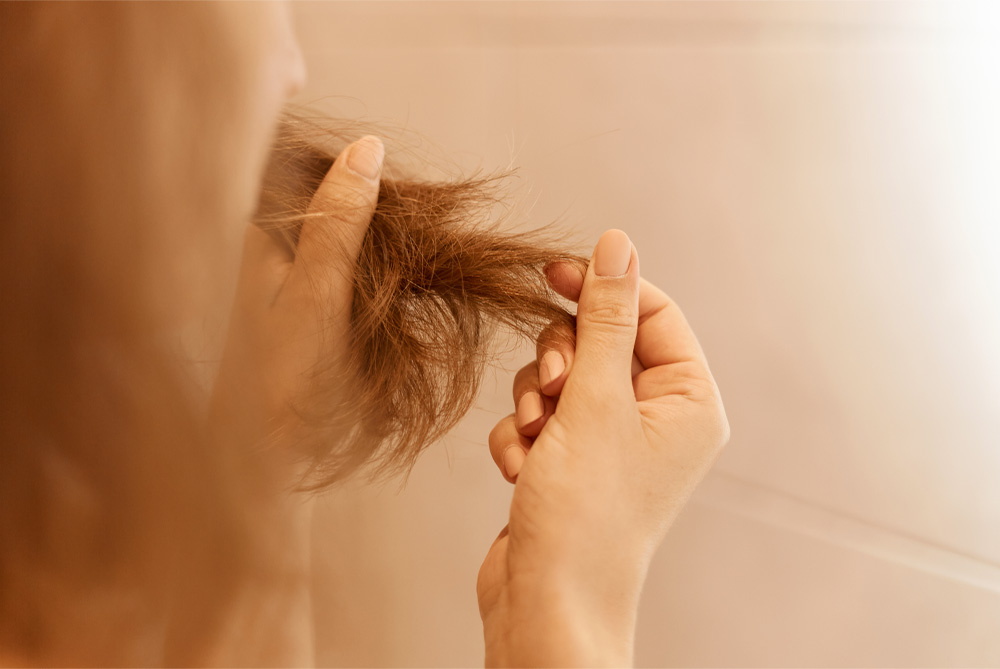
Dry hair is susceptible to breakage and feels rough and brittle and lacks adequate moisture. Often lacking brightness and difficult to style or manage, it looks uninteresting.
Causes: Dry hair usually stems from moisture loss from the hair shaft.
- Exposure to sun, wind, dry air, or severe cold over time can dry out hair under severe weather situations.
- Shampoos with strong sulfates, alcohol-based styling products, or products that don’t provide enough moisture can aggravate dryness.
- Even when washing is done too often, excess greasiness may develop, whereas an insufficient amount of washing may lead to the development of a product buildup that will not allow water and the moisture that it carries to reach the hair shaft.
- Permed hair and bleached or colored hair can damage the cuticle severely, so that it is unable to retain any moisture.
- Malnutrition within a diet that lacks important minerals, vitamins, and fatty acids can create changes in the quality of the hair.
Solution: To moisturize dry hair, mention moisturizing methods and products that are highly hydrating.
- They should exchange your existing moisturizing products for hydrating shampoos, conditioners, and masks specifically designed to deal with dry or damaged hair. Ingredients such as hyaluronic acid, glycerin, argan oil, coconut oil, shea butter, and ceramides are good to find.
- Include a deep conditioning treatment or hair mask 13 times per week. Leave-in conditioners can also give all-day, constant moisture.
- Wear a cap when subjected to extended sun or wind to help guard your hair. Think about resting on a silk or satin pillowcase to cut friction and water loss.
- Make sure you’re eating a balanced diet full of vitamins, minerals, and good fats like omega-3s; also, drink enough water.
2. Dandruff
Often accompanied by an itchy feeling, dandruff is a frequent scalp ailment marked by white or yellowish flakes of dead skin cells that shed from the scalp. Though it is innocuous, it can be humiliating and humiliating.
Causes: There are several things that could give rise to dandruff.
- The scalp may become irritated and shed little, dry flakes when it is without moisture.
- Malassezia is a yeast-like fungus normally present on everyone’s scalp and can further result in excessive growth and irritation of the scalp, which leads to stronger turnover of the skin cells, causing flaking.
- The build-ups of shampoos, conditioners, and other hair styling products, or in rare cases, the build-up of washing residues may lead to scalp irritation and flaking.
- The worst form of dandruff is characterized by red oily flakes.
Solutions: There is also the possibility of certain individuals reacting to specific chemicals found in hair care products that leads to flaking and contact dermatitis. The cure usually involves a combination of the right products as well as a regular regime of taking care of the scalp.
- Active ingredients such as zinc pyrithione, selenium sulfide, ketoconazole, or salicylic acid are found in shampoos. Apply as directed; it is typically left on most of the time and then washed away, as these ingredients are either fungus-specific, reduce inflammation, or enable exfoliation of dead skin.
- In case of dry scalp, massage coconut oil, jojoba oil or tea tree oil ( diluted ) to your head and wash. Tea tree oil is naturally antifungal.
- Rinsing of hair aids in the avoidance of accumulation of products through thorough soul rinsing after shampooing and rinsing. Stop causing more irritation by using mild and sulfate-free hair care products. Avoid harsh certainties.
- General scalp health interference should be done by stress management techniques and a proper diet rich in B vitamins and zinc.
3. Frizzy Hair:
Rising of the cuticle layer of the hair causes frizz, which lets air moisture enter the hair shaft and cause swelling. This results in a harsh, rough texture, a lack of definition, and sometimes a halo of untidy hair. Basically, frizz indicates your hair is thirsty and in need of water.
Causes: Mainly a fight between the degree of moisture in your hair and the ambient humidity, frizz results from this.
- This is the most egregious offender. Damaged or dry hair grabs moisture from the atmosphere when the air is humid, which causes the cuticle to swell and produce frizz.
- Already raised, your hair’s cuticle will be more prone to absorbing moisture from humid air and frizzing if it is naturally dry.
- Cuticle (damaged, weakened) due to heat, chemicals or rough treatment will not lie flat, hence making penetration of moisture and generation of frizz easy.
- Alcohol or sulfates just take the natural oil out of your hair and make it dry and frizzier.
- Friction led by rough drying of towels, combing dry hair, or usage of standard cotton towels breaks away the cuticle and creates frizz.
Solutions: Frizzy hair has to be countered with cuticle sealing and sufficient hydration.
- Apply moisturizing conditioners and shampoo. Ensure that you have some deep conditioning sessions or hair masks to saturate your hair. Plentifully hydrated hair is less likely to frizz or absorb the humidity in the air.
- New products with anti-frizzing properties include anti-frizz serums, anti-frizz lotions, or leave-on conditioners to be applied to damp hair. Choose such substances as silicones (in small portions), natural oils (argan, coconut), and humectants (to seal the cuticle and act as a protector against humidity).
- Lay up your coarse towel. Instead, gently press out the excess water in your hair with a microfiber cloth or a worn-out cotton t-shirt. Where at all possible just air-dry or blow-dry on a low heat application preferably utilizing a diffuser.
- Excessive brushing of dry hair ruins the cuticle leading to frizz. To disentangle use a wide-toothed comb or some fingers.
- To limit heat and rough chemicals that may dry your hair, reduce heat and limit products that contain a high content of alcohol and harsh chemicals.
4. Split Ends
Scientifically referred to as trichoptilosis, split ends arise when the cuticle, the outermost protective layer of your hair, gets damaged and peels off. This opens the inner cortex, thereby causing the hair shaft to physically separate into two or more strands resembling little, frayed ropes. Although they usually show up at the very ends of your hair, if left untreated they can migrate up the hair shaft and cause greater damage and breakage.
Causes: Mechanical or chemical harm is the main cause of split ends.
- Repeated application of hot styling instruments such as curling irons, flat irons and blow dryers at high temperatures may drain water and moisture out of the hair, which becomes dry and stiff.
- Chemical processes such as perm, coloring, and bleach may also destroy the structural strength of the hair to an extent that would make the hair weak and flabby.
- Long sun, wind and harsh cold may also dry the hair up thus making hair weak.
- Aggressive towel drying, vigorous brushing of wet hair, utilization of brushes with rough bristles, and rare haircuts cause breakdown of the hair shaft.
- Even daily friction, such as that from cotton pillowcases, garments, or scarves, can create wear and tear.
Solutions: Although a split end cannot be repaired once it has formed, you can prevent new ones and manage existing damage.
- Every 4-6 weeks, plan cuts of damaged ends before they can go up the hair shaft.
- Pat your hair dry with a microfiber towel or an antique cotton t-shirt rather than aggressively scrubbing. Begin at the ends and work your way up to untangle wet hair with a wide-tooth comb.
- Put a deep conditioner or a hair mask in the hair routine twelve times a week. Discover moisture-locking and strengthening ingredients such as keratin, argan oil, shea butter, and proteins of natural origin.
- Reverse braid your hair, wear a bun, or other protective updo hair styles, particularly during sleep or when any of your activities would cause your hair to rub.
5. Greasy Hair:
Oily hair is because of excess production of sebum, which is a natural oil in your scalp secreted by glands. When you have too much sebum you may find your hair to appear limp, lifeless, dull and oily; you can even find your hair to feels heavy and unclean despite early cleaning.
Causes: An oily scalp is brought forth by a lot of factors.
- Ironically, over-washing of hair will remove all natural oils left on the scalp, making the sebaceous glands create additional oil as a way of balancing it out.
- The hormonal variations that occur during puberty, in the process of pregnancy, or when we are under acute stress increase the secretion of sebum.
- Products that are rich in silicones or heavy oil based or waxed or, in excess, leave-in conditioner may bog the hair down and appear greasy.
- Incessant pulling of hair with your hands distributes oil and dirt that are on your fingers to your hair.
- Contaminated styling tools are likely to transfer oil and product leftovers onto your fresh hair.
Solutions: Regulating oily hair entails rebalancing your scalp’s oil production and modifying your regimen.
- Gradually lower your hair washing frequency. Begin by missing a day, then two so your scalp may recover.
- Concentrate on the middle lengths and ends and refrain from putting conditioner straight on your scalp. Avoid items that have a lot of style.
- A lifesaver between shampoos, dry shampoo soaks up extra oil and gives volume. Apply it to your roots, wait a few minutes, then brush through.
- Clean your combs and brushes frequently to get rid of built-up oil and product residue.
- Because stress can impact hormones, including stress-reduction methods can indirectly help control oil generation.
- Try to limit handling your hair during the day to avoid transmitting oils from your hands.
Get Healthier Hair Starts Here
It requires education, patience, and care to take control of the daily hair problems. Identifying the specific issue that your hair is facing and applying the measures aimed at its resolution allows you to alter the way your hair feels and appears. It is important to remember that good hair is the by-product of health; thus, add holistic aspects to your care, proper hydration, healthy eating and stress reduction. Whatever you are battling with (split ends, dandruff, oil, dryness or frizz), the secret is to never attack your hair, provide it with what it needs and protect it against harm.